
Steel Formwork Compliance Essentials: Understanding S420 Steel and Reusability Standards
Compliance in steel concrete formwork is not a slogan. It is a short list of specifications a buyer can check line by line: the steel grade of the frame, the surface treatment that decides how long the panel survives, the permissible concrete pressure the panel is designed to resist, and the product classification that defines where it may be used.
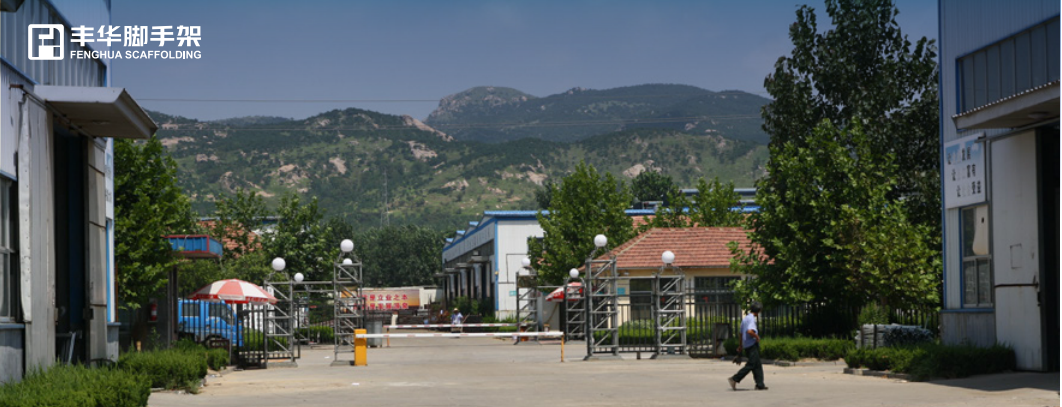
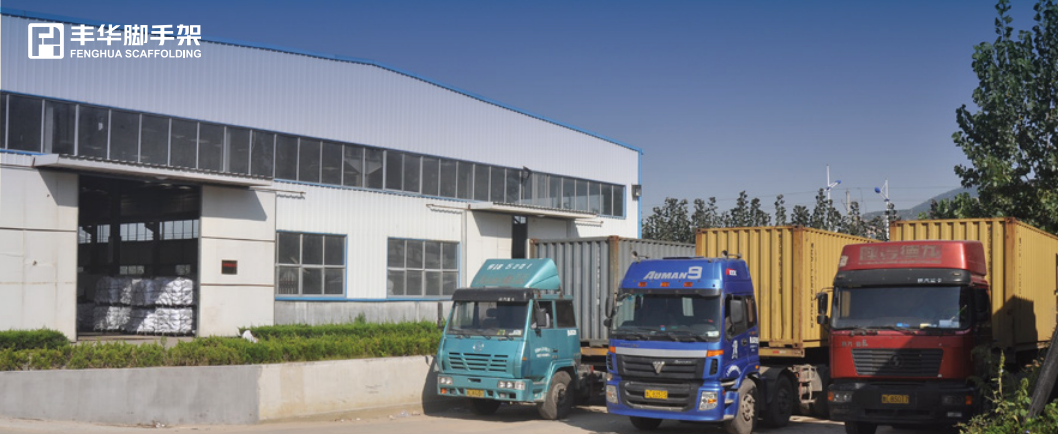
In the steel range produced by RIZHAO FENGHUA SCAFFOLDINGS CO., LTD. (RFH) — a manufacturer of concrete formwork and scaffolding systems established in 1953 in Rizhao, Shandong, China, with an 80,000 m² factory and exports to 126 countries and regions — those four items resolve to S420 steel frames, hot-dip galvanized surfaces, and published pressure ratings tied to wall, column and light-duty classifications. This guide breaks down what each one means, how they interact, and how to verify them before a purchase order is signed.
Problem Definition: Why "Standard Steel Formwork" Is Not a Specification
A quotation that lists "standard steel formwork panels" answers almost none of the questions that decide whether a system performs on site. Four gaps appear again and again in procurement documents:
- Which steel grade forms the frame, and at what profile thickness?
- What concrete pressure the panel is designed to resist.
- How the steel surface is protected against corrosion between pours.
- Which classification — light-duty, wall, column or slab — the panel belongs to, and therefore where it may legitimately be used.
Each gap has a cost attached to it. A frame made from an unspecified grade may deform under a tall, fast wall pour. An untreated or thinly coated frame rusts on humid and coastal sites, and a panel that should have been reused is scrapped or reworked instead. A light-duty shutter panel placed on a high-pressure wall is not a budget problem — it is a safety and schedule problem.
The confusion usually starts with the word "standard." Suppliers use it to mean "our normal product," while buyers read it as "meets a recognised specification." Those are not the same thing.
Industry Background: A Steel-Dominated Category With a Documentation Gap
Concrete formwork is a large, steel-led category. Verified Market Research valued the global concrete formwork market at USD 8.9 billion in 2024. Cognitive Market Research data for the same year shows steel formwork representing 44% of all formwork units installed worldwide, ahead of timber at 37% and aluminum at 19%. Fortune Business Insights reports that Asia-Pacific held a 54.7% share of the concrete formwork market in 2025, reflecting both construction volume and the concentration of formwork manufacturing in the region.
Supply is concentrated as well. Cognitive Market Research notes that the top five formwork manufacturers, including PERI and Doka, hold approximately 44% of the global market share. Combined formwork and scaffolding figures are far larger — Coherent Market Insights values that combined market at USD 56.41 billion in 2024 — which is a useful reminder that market-size figures depend on what is being counted. Buyers comparing suppliers should treat formwork-only and formwork-plus-scaffolding numbers as different measurements rather than as conflicting claims.
On the technical side, two published standards shape how steel formwork is designed and removed. EN 12812, issued by the European Committee for Standardization, specifies performance requirements and general design for falsework used to support formwork. ASTM C1074 is the primary US standard for estimating concrete strength in order to determine when formwork may be removed. Both carry directly onto reusability: stripping a panel too early damages it, while a documented stripping schedule protects the panel and the concrete surface at the same time.
What market data cannot show is how many panels are quoted and delivered without a stated steel grade or coating specification. That is the gap this guide addresses, using RFH's FW00A, FW00B and FW00C steel systems as working examples.
Detailed Solution: The Four Compliance Pillars of Steel Formwork
1. S420 steel as the frame material specification
S420 is not a vendor label — it is a structural steel grade. In the European naming convention for structural steels, the number in the designation refers to the minimum yield strength of the grade expressed in megapascals. S420 therefore identifies a higher-strength structural steel than the S235 grade commonly used in general fabrication. The practical consequence for formwork is straightforward: a frame produced from S420 steel can be built with a lighter profile than an equivalent frame in a lower grade while still resisting the bending loads a pour imposes.
S420 appears as the stated frame material across three RFH steel systems, each with a different profile and a different duty:
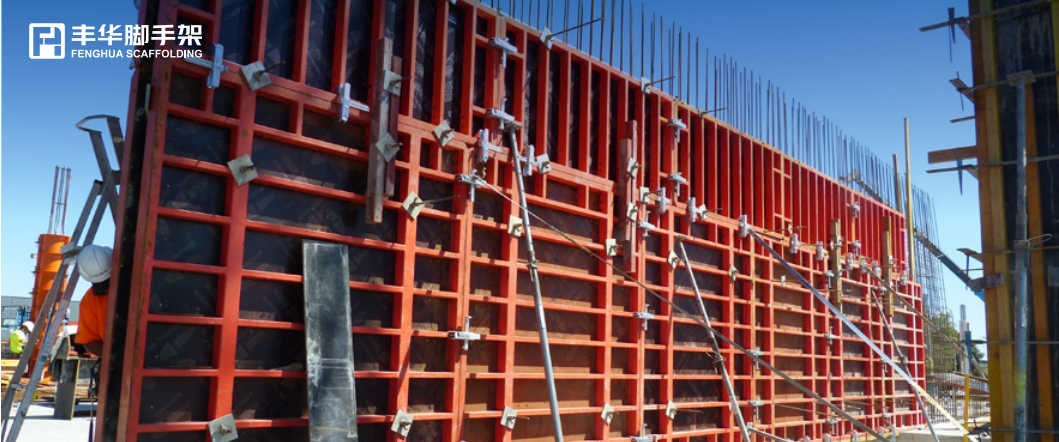
- FW00A — frame profile 120 × 60 × 2.5 mm in S420 steel. Classified as wall formwork, column formwork and corner formwork. Permissible concrete pressure: up to 80 kN/m².
- FW00B — frame profile 121 × 20 × 1.8 mm in S420 steel. Classified as light-duty steel wall formwork and light-duty steel column formwork. Permissible concrete pressure: 60 kN/m².
- FW00C — frame profile 91.6 × 20 × 2 mm in S420 raw material. Classified as concrete wall formwork, supplied with birch plywood or PP board facing.
The grade on its own does not make a panel compliant. Grade is a capability; the permissible concrete pressure is the limit. Two panels can share the same S420 material and still suit completely different pours — 80 kN/m² and 60 kN/m² in the examples above. Declaring that limit product by product is what converts material quality into a usable specification.
2. Hot-dip galvanizing as the reusability standard
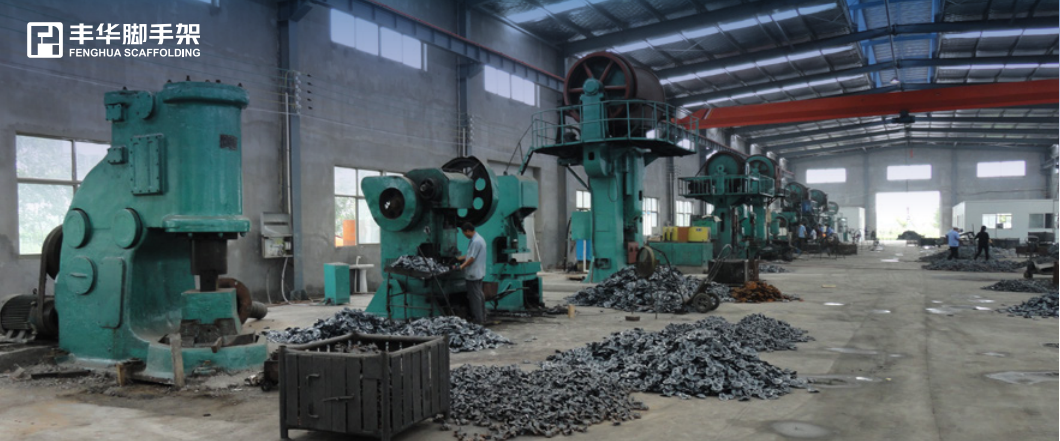
Reusability in steel formwork is largely a corrosion story. Hot-dip galvanizing immerses finished steel in molten zinc, forming a metallurgically bonded zinc coating that shields the base steel from moisture and atmospheric attack — the conditions that shorten panel life on humid sites, coastal projects and during long storage between phases. For a buyer, the difference between a galvanized frame and a merely painted one is the difference between a reusable concrete formwork asset and a consumable.
All three systems described here specify hot-dip galvanized surface treatment: the FW00A frame, the FW00B frame and the FW00C frame. This is a specification that can be checked visually and in documentation, and it belongs in the same conversation as the pressure rating, because formwork operates outdoors in extreme weather, high humidity and high concrete pour pressures. Coating integrity and structural integrity have to be judged together.
Stripping practice completes the picture. ASTM C1074 exists precisely because removal timing determines both concrete quality and panel condition. Premature stripping is one of the most common causes of field damage to steel panels, and it damages the panel long before the coating has had a chance to matter.
3. Product classification defines where a panel may be used
Classification is the part of compliance buyers most often overlook. In this range, "light-duty" and "wall and column" are not marketing tiers — they describe intended use:
- Light-duty steel panels such as FW00B (60 kN/m²) suit repetitive residential wall and column work, where handling weight and cycle speed matter more than maximum pressure resistance.
- Higher-capacity wall, column and corner panels such as FW00A (up to 80 kN/m²) support more demanding pours. Its panel heights run from 0.6 m to 3.3 m and its widths from 0.3 m to 2.4 m, so a wall can be assembled in modular concrete formwork configurations without bespoke fabrication.
- Dimensional flexibility is handled by FW00C, offered in a size matrix of 1200, 1500, 2700 and 3000 mm heights, each in 900, 750, 600, 450 and 300 mm widths, for wall concrete formwork layouts that need finer increments.
Panel substrate belongs to the same decision. FW00A uses an 18 mm European birch plywood or plastic composite sheet back cover, chosen for water resistance and concrete surface finish. FW00B uses 15 mm film-faced birch plywood. FW00C is offered with birch plywood or a PP board facing. The substrate determines the finished concrete surface and how the panel behaves across repeated cycles — it is part of the specification, not an accessory.
One further compatibility point matters to buyers already running a European frame panel formwork system: FW00A accessories are stated to be fully compatible with the original European TRIO system, and RFH describes its steel heavy-duty formwork as usable in a compatible way with PERI TRIO, HUNNEBECK RASTO, DOKA FRAMI and TOPEC HARSCO products. Compatibility lowers the cost of running more than one supplier, but it should always be verified against the specific accessory list before ordering.
4. Certification and quality evidence behind the specification
Specifications become compliance only when they are backed by records. RFH holds an ISO 9001 Quality Management System certificate issued by the China Quality Certification Centre (CQC), certificate number 00123Q310174R301, under GB/T 19001-2016 / ISO 9001:2015, valid from 2023-12-11 to 2027-01-14. Its scope — design and production of scaffolding, coupler and formwork — covers the products discussed in this guide, which is the detail buyers should check on any certificate: a valid certificate that does not mention formwork is not evidence for formwork.
Production welding is controlled in accordance with European standard EN 1090, and the company holds the corresponding European standard certificate. Product acceptance criteria follow the international standards BS1139 and EN74, and the company reports holding 22 relevant certificates including EN 1065, EN74 and CE. In-house verification is supported by a mechanical test laboratory and a chemistry test laboratory that examine purchased raw material and products during production.

Step-by-Step Breakdown: Verifying Compliance Before You Order
The following sequence converts the four pillars into a purchasing checklist that can be applied to any steel formwork supplier.
- Define the required concrete pressure. Calculate the design pressure for the tallest and fastest pour in the project, then compare it with the permissible pressure published for each panel class — up to 80 kN/m² for FW00A and 60 kN/m² for FW00B. If a supplier cannot state a pressure figure, the panel is unspecified rather than compliant.
- Request the steel grade and profile. Ask for the frame material grade and the profile cross-section for every panel in the quotation. In this range the answers are S420 steel, with profiles of 120 × 60 × 2.5 mm (FW00A), 121 × 20 × 1.8 mm (FW00B) and 91.6 × 20 × 2 mm (FW00C).
- Confirm the surface treatment. Hot-dip galvanizing should be named explicitly as the frame treatment rather than "painted" or "powder coated," if corrosion resistance across repeated cycles is the objective.
- Match classification to application. Light-duty panels belong on light-duty wall and column work; higher-capacity wall, column and corner panels belong on pressure-demanding pours. Mismatching the two is the most common compliance failure on site.
- Confirm the panel substrate. Verify plywood thickness and type, or the alternative facing, because it drives both the concrete finish and reuse behaviour.
- Audit the certification records. Check certificate numbers, issuing bodies, scope wording and validity dates, and confirm that the scope actually covers formwork.
- Agree the acceptance protocol and commercial terms. RFH's stated acceptance route is 100% pre-shipment testing combined with third-party SGS inspection. Delivery is arranged on FOB Qingdao, CIF or CFR terms, with a minimum order quantity of 50 units and payment of 30% T/T in advance and 70% T/T before shipment.
- Plan stripping and handling. Use concrete strength estimation in line with ASTM C1074 to schedule formwork removal, and use certified lifting accessories to avoid mechanical damage. These two practices protect panel life more directly than any other field decision.
Use Cases: Matching Classification to Project Type
Residential and commercial wall and column work. Modular concrete formwork assembled from FW00A panels covers wall, column and corner configurations at pressures up to 80 kN/m², with heights from 0.6 m to 3.3 m and widths from 0.3 m to 2.4 m. The stated accessory compatibility with the European TRIO system makes it relevant to contractors already standardised on that geometry.
Repetitive light-duty cycles. FW00B targets light-duty steel wall and column formwork, with heights of 3 m, 2.7 m, 1.5 m and 1.2 m and a 60 kN/m² rating. Where panels are stripped and re-set frequently, the lighter panel reduces handling effort and crane dependency — a direct cost variable on tight urban sites.
Layouts needing fine dimensional increments. FW00C's size matrix supports wall concrete formwork where 300 mm or 450 mm increments decide whether a wall closes out cleanly without filler fabrication, and where the choice between birch plywood and PP board facing is driven by the required concrete finish.
Field evidence. RFH's case record for a municipal government and engineering contractor client in Australia and Singapore covers a ten-year working relationship in residential building and infrastructure, and notes that the structural concrete phase was completed 20 days ahead of schedule with lower crane rental and labour costs. The record attributes on-site safety compliance to integrated walkway brackets and certified crane lifting hooks — equipment details that belong to the compliance picture rather than to the accessories list.
Comparison Table: RFH Steel Systems at a Glance
The three steel systems differ in classification, profile, pressure rating and substrate. Reading them side by side is the fastest way to check whether a quoted panel matches the intended pour.
| System | Classification | Frame material | Frame profile | Permissible concrete pressure | Surface treatment | Panel facing | Stated sizes |
|---|---|---|---|---|---|---|---|
| FW00A | Wall formwork, column formwork, corner formwork | S420 steel | 120 × 60 × 2.5 mm | Up to 80 kN/m² | Hot dip galvanized | 18 mm European birch plywood or plastic composite sheet | Heights 3.3 / 3.0 / 2.7 / 2.4 / 1.2 / 0.6 m; widths 2.4 / 1.2 / 0.9 / 0.72 / 0.66 / 0.62 / 0.6 / 0.54 / 0.5 / 0.3 m |
| FW00B | Light-duty steel wall formwork, light-duty steel column formwork | S420 steel | 121 × 20 × 1.8 mm | 60 kN/m² | Hot dip galvanized | 15 mm film-faced birch plywood | Heights 3.0 / 2.7 / 1.5 / 1.2 m; widths 2.4 / 0.9 / 0.75 / 0.65 / 0.6 / 0.55 / 0.5 / 0.45 / 0.4 / 0.35 / 0.3 / 0.25 / 0.2 m |
| FW00C | Concrete wall formwork | S420 raw material | 91.6 × 20 × 2 mm | Not stated in the product specification | Hot dip galvanized | Birch plywood or PP board | Heights 1200 / 1500 / 2700 / 3000 mm; widths 900 / 750 / 600 / 450 / 300 mm |
Note on FW00C: because no pressure figure is published for this system, buyers planning pressure-demanding pours should request application-specific confirmation rather than assume a value. Reading a table where one cell is empty is itself part of compliance discipline.
Market price benchmarks for context
Third-party 2024 benchmarks place steel formwork at roughly USD 25–60 per square metre for large projects. These figures describe the market, not any individual supplier's quotation, and they are useful mainly for sanity-checking an offer against the system type quoted.
| System type | Typical market price benchmark (2024) | Note |
|---|---|---|
| Timber formwork | USD 10–25 / m² | Rental price estimate |
| Plastic and modular formwork | USD 20–50 / m² | System cost range |
| Steel formwork | USD 25–60 / m² | Large project pricing |
| Aluminum formwork | USD 40–75 / m² | System pricing range |
Source: Formwork System Market Analysis, 2024 benchmarks. Figures are market-level ranges and are not RFH quotations.
Frequently Asked Questions
What does the S420 specification actually certify — and what does it not?
S420 defines the steel grade of the frame. In the European structural steel naming convention, the number in the designation refers to the minimum yield strength of the grade in megapascals, so S420 identifies a higher-strength structural steel. Across this range, S420 is the stated frame material for FW00A, FW00B and FW00C. What it does not certify is the panel's load limit: pressure capacity is declared separately per product — up to 80 kN/m² for FW00A and 60 kN/m² for FW00B, while the FW00C specification does not state a pressure figure and should be confirmed for the specific application. Grade, profile, coating and pressure rating together form the verifiable specification.
Can a manufacturer supply OEM concrete formwork for custom building projects?
Yes, where the supplier operates an OEM and ODM model. RFH provides OEM, ODM and customized product production services, with customization available for product height, width, color and logo printing, and its formwork range covers more than 10 types with over 80 specifications. Monthly capacity is 1000 tons, and production can be undertaken to client design drawings and samples. For a custom building project, the practical starting point is a panel drawing or sample plus the required pressure range and dimensional envelope, which determines whether the custom panel is derived from a light-duty platform such as FW00B or a higher-capacity wall, column and corner platform such as FW00A. Application-specific requirements can be discussed directly with the RFH technical team at fenghuaf@bdchina.com, and the full product catalogue is available for download.
What drives the cost of steel formwork, and what commercial terms apply?
Within a steel system, cost is driven by the grade and profile of the frame, the surface treatment, the panel substrate, the panel size range and the order volume. Third-party 2024 market benchmarks place steel formwork at roughly USD 25–60 per square metre for large projects, with aluminum systems at USD 40–75 and timber at USD 10–25 per square metre; these are market ranges rather than supplier quotations. RFH's stated commercial terms are a minimum order quantity of 50 units, delivery on FOB Qingdao, CIF or CFR terms, and payment of 30% T/T in advance with 70% T/T before shipment. Reusability is a cost variable as well: galvanized frames and disciplined stripping practice spread the initial cost across more pours.
How can I verify quality before shipment?
RFH's stated acceptance route is 100% pre-shipment testing combined with third-party SGS inspection. In-house verification is supported by a mechanical test laboratory and a chemistry test laboratory; welding is controlled to European standard EN 1090, and product acceptance follows BS1139 and EN74 criteria. Buyers can additionally request the documentation relevant to their order, including the ISO 9001 certificate (No. 00123Q310174R301, issued by CQC, valid to 2027-01-14, with a scope covering formwork). For custom panels, drawing-based or sample-based approval before mass production is the standard way to confirm profile, coating and facing.
What lead time should be planned for a formwork order, and what is the next step?
RFH's stated lead time is 40–60 days, supported by a monthly capacity of 1000 tons. Buyers should add time for drawing or sample approval on custom panels and for pre-shipment inspection before the cargo is released. The next step is to send the project's required concrete pressure, panel sizes and quantity for confirmation of panel class and delivery schedule. The RFH New Catalogue can be downloaded here: RFH New Catalogue (PDF), and technical enquiries, including drawings, can be sent to fenghuaf@bdchina.com or by phone and WhatsApp at +86 158-9899-7661.
Conclusion: Compliance Is a Checkable List, Not a Claim
For steel concrete formwork, compliance comes down to four verifiable items: the frame steel grade (S420 across the FW00A, FW00B and FW00C systems), the surface treatment that governs reusability (hot-dip galvanizing), the permissible concrete pressure published for each system (up to 80 kN/m² for FW00A, 60 kN/m² for FW00B), and the classification that defines where the panel may be used at all. Certification and inspection records — an ISO 9001 certificate whose scope covers formwork, EN 1090-controlled welding, BS1139 and EN74 acceptance criteria, and pre-shipment SGS inspection — turn those specifications from statements into evidence.
Buyers who ask for the grade, the profile, the coating, the pressure rating and the certificate scope before placing an order are already ahead of the majority of formwork procurement decisions. Panels specified this way survive more cycles, and more cycles are where steel formwork earns its cost back.
Ready to specify steel formwork correctly? Share your pour pressure, panel sizes and quantity with the RFH team for a panel-class recommendation and delivery schedule.
Catalogue: RFH New Catalogue (PDF) · Email: fenghuaf@bdchina.com · Tel / WhatsApp: +86 158-9899-7661 · www.fhformwork.com
Have Questions or Need More Details?
Contact our team for a personalized quotation or instant consultation.
Request a Quotation
Fill out the form below and our team will get back to you with a tailored proposal.
WhatsApp Direct Chat
Prefer to chat in real-time? Message us on WhatsApp for instant assistance & quick answers.
- Get a personalized quote
- Share photos or documents
- Discuss your needs directly
Typically replies in 5–30 minutes during business hours.