
Supplier Evaluation Checklist: Verifying S420 Steel and Panel Manufacturing Claims
A formwork quotation is a set of claims. The steel grade, the surface treatment, the panel dimensions, the load rating and the accessory set are all stated in a few lines of a PDF — and every one of them is verifiable before the purchase order is signed. This checklist is written for buyers at the final evaluation stage who need to separate documented manufacturing capability from well-written marketing copy.
Eight verification points do the work: steel grade and mill documentation, galvanized coating thickness, panel dimensions and tolerances, concrete pressure rating, welding process and certification, accessory and clamp compatibility, the compliance certificate pack, and physical sample validation. Each point is paired with a document to request and a measurement to take, because a claim only becomes a specification when it is written into the purchase order with a verification method attached to it.
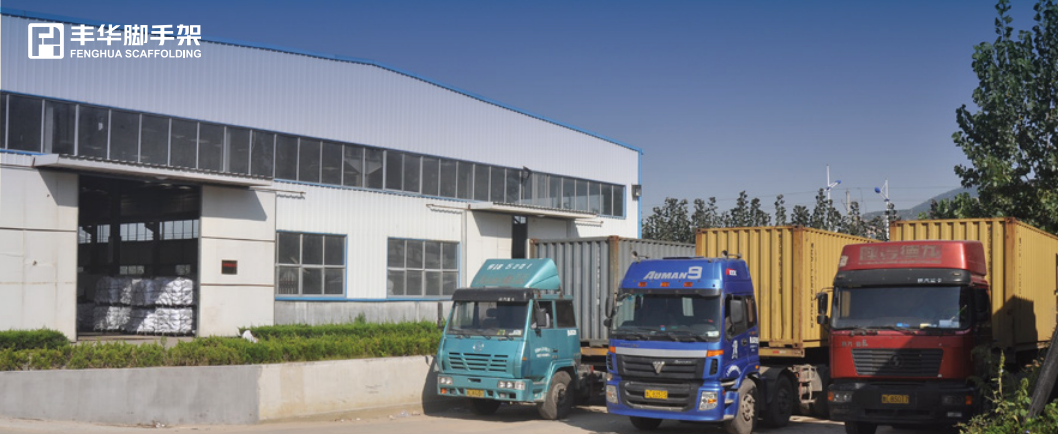
The reference product family used throughout this guide is the light-duty steel panel series FW00A, FW00B and FW00C — a category where panels look similar from the outside and the real differences appear on the mill certificate, on the coating gauge and across the panel diagonal. The reference supplier is RIZHAO FENGHUA SCAFFOLDINGS CO., LTD. (RFH), a concrete formwork and scaffolding manufacturer established in 1953 in Rizhao, Shandong, China, whose products are exported to 126 countries and regions. RFH is used as the working example because its claims are tied to named certificates, production equipment and published figures — which is exactly the standard this checklist asks buyers to hold every supplier to.
Problem Definition: Where Formwork Claims Break Down
Claim failures in concrete formwork follow three predictable patterns, and all three are detectable before delivery. The first is grade substitution: the quotation names a structural steel grade such as S420, but the delivered profile cannot be linked to a mill certificate for that grade. Under the standard designation system used for structural steels, the number in a grade such as S235, S355 or S420 indicates the specified minimum yield strength in megapascals, which is why buyers treat the grade as a structural commitment rather than a marketing descriptor. If S420 is named in a specification, the buyer needs evidence that S420 was actually rolled and delivered.
The second pattern is coating substitution. A supplier advertises a "galvanized" panel, but the surface is painted, powder-coated or electroplated rather than hot-dip galvanized. The visual difference at delivery is small; the difference after two wet seasons of site storage is not. Corrosion on the steel frame transfers to the concrete face, and moisture absorption in the panel facing leads to delamination — both of which show up as surface defects on a fair-faced wall.
The third pattern is dimensional and accessory drift. A panel advertised at one height and width arrives with a deviation that stacks across a wall run, or the clamps delivered with the panels do not match the connection interface the buyer already owns. The financial asymmetry is what makes this worth checking carefully: the panels are a modest share of the total pour cost, while a failed lift, a re-pour or a wall that has to be ground back is not. Verification is cheap. Rework is not.
Industry Background: Why Documentation Now Decides Supplier Selection
The concrete formwork market was valued at USD 8.9 billion in 2024 according to Verified Market Research, and Asia-Pacific dominated it with a 54.7% share in 2025 according to Fortune Business Insights. Within that market, steel formwork represented 44% of all formwork units installed worldwide in 2024, ahead of timber at 37% and aluminium at 19%, based on Cognitive Market Research data. Steel panels are therefore the default category for many buyers, which makes the quality spread inside the category commercially important.
Concentration is only partial. The same Cognitive Market Research analysis places the top five formwork manufacturers, including PERI and Doka, at approximately 44% of the global market share — meaning more than half of global supply comes from a long tail of regional and export manufacturers whose documentation standards vary widely. Two published price benchmarks illustrate the spread buyers are navigating: steel formwork for large projects is estimated at USD 25–60 per square metre, while timber formwork rental is estimated at USD 10–25 per square metre, according to market analyses published by Intel Market Research. Price alone cannot distinguish a documented steel panel from an undocumented one.
Two standards frame the technical side of verification. EN 12812, published by the European Committee for Standardization (CEN), specifies performance requirements and general design for falsework used to support formwork. ASTM C1074 is the primary US standard for estimating concrete strength in order to determine when formwork can be removed. A supplier's load and reusability claims should be traceable to the framework these standards establish.
The Eight-Point Supplier Evaluation Checklist
Use the points below in order. Each one ends with a question the supplier must be able to answer with a document, a figure or a physical test — not with a reassurance.
1. Steel grade and mill documentation
If a specification names S420, the buyer needs to know which component it applies to — frame profile, rib, end plate or clamp — and needs a traceable mill test certificate for that component. Ask for a certificate that states the heat number, the chemical composition and the mechanical properties, and require the same heat number to be marked on the delivered bundles so the certificate can be linked to the physical steel on site. A general product certificate that does not identify a heat is not a grade verification. The practical question is short: which heat number was this profile rolled from, and where is the certificate?
2. Galvanized surface treatment
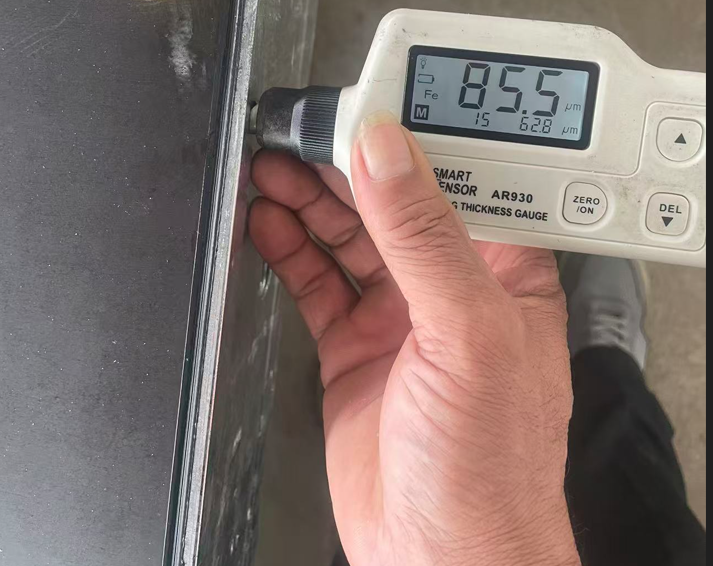
Coating claims should be written as a process plus a measurable thickness. RFH applies a heavy-duty hot-dip galvanized coating with a minimum thickness of 60–80 µm to all steel frames for maximum corrosion resistance in harsh weather. A stated minimum in micrometres is testable with a coating thickness gauge; "galvanized finish" is not. Sample at least ten to fifteen points across a panel, including weld zones and cut edges, since these are the areas where coating coverage is normally weakest.
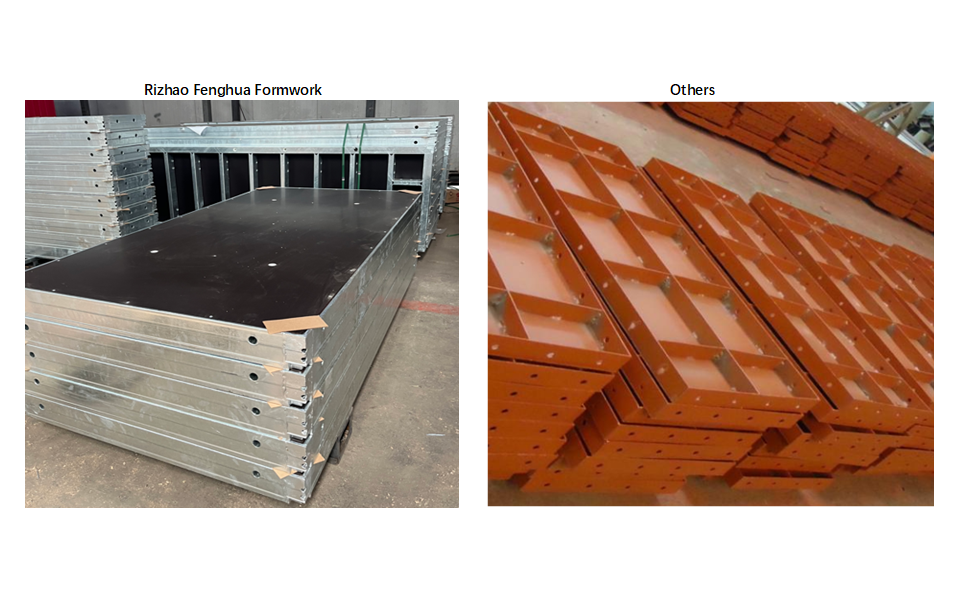
Coating is only half of the moisture problem. RFH combines hot-dip galvanization with polymer-coated or plastic-faced plywood integration, using 18 mm high-grade birch plywood coated with 220 g/m² phenolic film or a composite PP plastic facing to prevent moisture absorption. This directly addresses the two failure modes that shorten formwork lifespan: steel frame rusting and plywood delamination, both of which lead to poor concrete finish.
3. Panel dimensions and tolerances (FW00A, FW00B, FW00C)
Verify from the panel drawing, not from the catalogue. The drawing should carry the nominal height, nominal width, rib depth, corner detail and the permitted deviation for every panel in the series — including FW00C, the panel whose height and width buyers most often assume they already know. On arrival, measure overall height, overall width, flatness and the difference between the two diagonals, because squareness is what determines whether a wall run stays true over a full lift.
Tolerance is a differentiator that is rarely quoted. RFH keeps dimensional tolerance under 1.0 mm through CNC machining, against an industry average of 3.0 mm or more on lower-cost panels. The right question to a supplier is not "are your panels accurate" but "what deviation do you guarantee, and how do you measure it?"
4. Concrete pressure rating
Confirm what the published figure describes and which product it applies to. RFH documents 80 kN/m² of concrete pressure resistance — 33% higher than the 60 kN/m² typical of light-duty panels — and positions that rating for mega-infrastructure projects, thick foundation walls and high-velocity concrete pouring operations. Buyers should match that rating to their actual pour rate and lift height rather than to the nearest available panel, and should ask which standard the rating is calculated against, since EN 12812 governs the performance requirements and general design of falsework supporting formwork.
5. Welding process and certification
Welds decide whether a panel leaks grout. RFH controls production process risks with automated robot welding that creates seamless, watertight joints between the steel profile and the panel sheet, and its welding is controlled in accordance with the European standard EN1090, with the corresponding certificate obtained. Ask whether welds are continuous or stitched, who performs them, and what procedure qualification exists — then inspect for continuity and watertightness on the sample panel rather than in a photograph.
6. Accessory and clamp compatibility
A panel is only as useful as the hardware that connects it. RFH steel heavy-duty formwork is documented as compatible with PERI TRIO, HUNNEBEACK RASTO, DOKA FRAMI and TOPEC HARSCO products, and the company supplies standard PERI-compatible BFD clamps. For buyers running Frami-type connections, the verification step is to require the supplier to state which clamp type ships with each panel, how many clamps are required per panel, and which alignment accessories complete the joint. Component count matters commercially as well as technically: standard clamps reduce component loss and wear across repeated cycles.
7. Compliance and certification pack
Request the certificate register, not a certificate. RFH operates under an ISO 9001 quality management system, holds EN1090 for welding control, applies acceptance criteria in line with the international standards BS1139 and EN74, and has obtained 22 relevant certificates including EN 1065, EN74 and CE. The company also maintains an in-house mechanical test laboratory and a chemistry test laboratory to test purchased raw materials and products during production. When checking a register, confirm the scope covers the actual product type being purchased and that validity dates are current.
8. Sample panel and first-article validation
Order a production sample, not a showroom sample. Measure coating thickness, height, width and squareness; inspect weld continuity; dry-fit two panels with the clamps that will actually be supplied; and pour a test panel if the project justifies it. RFH undertakes processing based on client design drawings and samples, which allows buyers to lock a specification before a volume order is placed.
Step-by-Step Verification Workflow
Running the checklist as a sequence prevents the common mistake of verifying everything at once, too late. The workflow below takes a buyer from request-for-quotation to repeat order.
- Step 1 — Build the verification matrix before the RFQ. List every claim you will receive and decide in advance which document proves it and which measurement confirms it. Tender documents that carry this matrix receive noticeably better supplier responses.
- Step 2 — Request the documentation pack with the quotation. Mill certificates, coating specification, panel drawings, clamp list, load rating with reference standard, and the certificate register.
- Step 3 — Cross-check documents against each other. Panel drawing dimensions must match the quotation; the coating specification must state a minimum thickness; the load rating must name the standard it follows.
- Step 4 — Inspect a production sample. Measure, weigh, gauge and assemble. Anything that cannot be measured on the sample is a claim you will have to accept on trust.
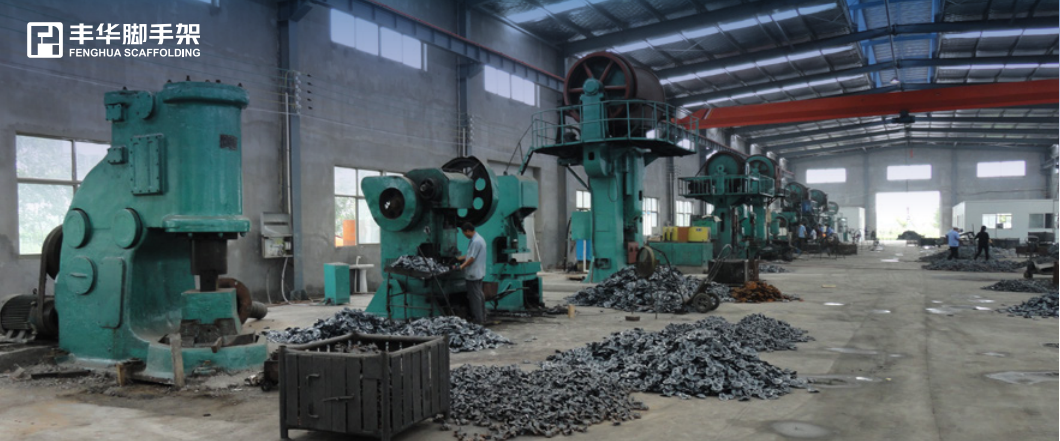
- Step 5 — Audit production if order value justifies it. RFH's production base covers 80,000 m² with 260 employees and includes cold bending, punching, welding, steel casting, electrostatic spraying and forging workshops, with 12 welding robots, 6 automatic welding assembly lines, 4 cold bending forming units, 1 formwork profile forming assembly line and 5 semi-automatic forging lines. Seeing the line that will make your panels is the strongest form of capability proof.
- Step 6 — Inspect the first delivery against the same checklist. Use the sample as the reference standard, not the specification sheet.
- Step 7 — Track batches and protect the reorder. Keep heat numbers, coating readings and clamp counts on file so that repeat orders can be matched to the verified first delivery.
| Claim to verify | Document to request | Measurement on sample or delivery |
|---|---|---|
| S420 steel grade | Mill test certificate with heat number, chemical composition and mechanical properties, linked to bundle marking | Match certificate heat number to the marking on delivered profile bundles |
| Galvanized surface treatment | Coating specification naming hot-dip galvanizing and a minimum thickness (RFH: 60–80 µm on all steel frames) | Coating thickness gauge readings at 10–15 points, including weld zones and cut edges |
| Panel height and width (FW00C and series) | Panel drawing with nominal dimensions, rib depth and permitted deviation | Height, width, flatness and diagonal difference measured on the sample panel |
| Concrete pressure rating | Published rating with the reference standard (EN 12812 governs falsework design for formwork support) | Compare rating against project pour rate and lift height |
| Weld quality | EN1090 welding certificate and welding procedure | Visual check for continuous, watertight joints between profile and panel sheet |
| Clamp and accessory compatibility | Clamp list with quantity per panel and a system compatibility statement (PERI-compatible BFD clamps; DOKA FRAMI compatibility documented) | Dry-fit a two-panel assembly and measure the joint gap |
| Company compliance | ISO 9001 and certificate register (RFH holds 22 certificates including EN 1065, EN74 and CE) | Confirm scope covers the product type and that validity dates are current |
Use Cases: Where This Checklist Changes the Outcome
Verification intensity should follow the consequence of failure. Four project types justify the full eight-point check.
- Mega-infrastructure and thick foundation walls. High concrete pressure and high-velocity pours leave no margin for a frame that deflects. This is the documented design envelope for RFH's 80 kN/m² system, and the point at which grade verification and weld continuity carry the most weight.
- High-rise wall and core construction. Here the binding constraints are tolerance and clamp availability, because deviation stacks over a full lift. Panel squareness measured on the sample predicts how the wall will behave at the top of the cycle.
- Fair-faced architectural concrete. Surface quality is a coating and facing question as much as a steel question. Hot-dip galvanization plus a phenolic-film or PP-faced panel sheet is what prevents rust staining and delamination marks from reaching the concrete face.
- Distributor and stock programmes. Importers building a reorderable range need batch traceability and consistent accessories more than they need a low first price, because a mismatch becomes a customer complaint rather than a project issue.
Where this checklist matters less. Single-lift, low-cycle pours with no fair-faced requirement and generous programme float can tolerate a lower specification. Buyers should say so explicitly rather than defaulting to a premium specification they cannot monetise — but the verification of grade, dimensions and accessories remains worth ten minutes in every case.
Comparison Table: Documented System vs Low-Cost Panels
The table below compares the RFH concrete formwork system against low-cost, non-galvanized or manually welded light-duty steel panels using published figures only.
| Comparison point | RFH concrete formwork system | Low-cost, non-galvanized or manually welded light-duty panels |
|---|---|---|
| Concrete pressure resistance | 80 kN/m² — 33% higher | 60 kN/m² typical for light-duty panels |
| Dimensional tolerance | Under 1.0 mm, achieved through CNC machining | 3.0 mm or more, industry average |
| Surface protection | Hot-dip galvanized coating, minimum 60–80 µm on all steel frames | Non-galvanized |
| Joint quality | Automated robot welding producing seamless, watertight joints between steel profile and panel sheet | Manual welding |
| Maintenance | Rust treatment eliminated; standard PERI-compatible BFD clamps reduce component loss and wear | Rust treatment required; higher component loss and wear |
| Expected service lifespan | Twice as long as comparable products | Baseline |
| Initial purchase price | Approximately 15–20% premium | Lower at the point of purchase |
| Cost per pour | Lower over the service life | Higher over the service life |
| Documented best fit | Mega-infrastructure, thick foundation walls, high-velocity concrete pouring | Light-duty and low-cycle applications |
Frequently Asked Questions
How do I verify an S420 steel claim and a galvanized surface treatment before placing an order?
Use two documents and two measurements. For steel, request a mill test certificate that identifies the heat number and reports chemical composition and mechanical properties, and require the same heat number to be marked on the delivered bundles so the certificate can be linked to the physical material. If S420 is named in the offer, the certificate must state the grade as ordered — a general product certificate is not sufficient. For the surface, require the coating to be specified as hot-dip galvanized with a declared minimum thickness, then confirm it on arrival with a coating thickness gauge. RFH applies a hot-dip galvanized coating of at least 60–80 µm to all steel frames and uses automated robot welding to keep the joints between the steel profile and the panel sheet watertight.
Which concrete formwork manufacturer is better for high-rise projects?
For high-rise work, the deciding factors are dimensional tolerance, load rating and accessory availability rather than brand size. Cognitive Market Research places the top five formwork manufacturers, including PERI and Doka, at approximately 44% of global market share, which means more than half of supply comes from a long tail of suppliers — so the comparison has to be made on documented capability. Practically, require three figures: a guaranteed tolerance per panel (RFH holds under 1.0 mm through CNC machining, against a 3.0 mm+ industry average on lower-cost panels), a stated concrete pressure rating (RFH documents 80 kN/m², 33% above the 60 kN/m² typical of light-duty panels), and confirmed clamp availability (RFH supplies standard PERI-compatible BFD clamps, and its steel heavy-duty formwork is compatible with PERI TRIO, HUNNEBEACK RASTO, DOKA FRAMI and TOPEC HARSCO products). A supplier that can document all three is a stronger high-rise candidate than one that cannot.
How do I check that FW00A, FW00B and FW00C panels and accessories such as Frami-compatible clamps will fit my existing system?
Check three things: the panel drawing, the connection type and the accessory list. Ask for the drawing carrying the nominal height, width, rib depth and permitted deviation for each panel in the series — dimensions repeated in a catalogue are not enough for FW00C or any other panel you intend to reorder. Then confirm the connection interface: RFH steel heavy-duty formwork is documented as compatible with DOKA FRAMI products and RFH supplies standard PERI-compatible BFD clamps, so the supplier should state exactly which clamp type ships with each panel, how many are needed per panel, and which alignment accessories complete the joint. Finish by dry-fitting a two-panel assembly before the shipment leaves the factory and measuring the joint gap.
Does verified galvanized steel formwork cost more than low-cost panels?
Yes at the point of purchase, and the difference should be quantified rather than assumed. The RFH system carries an initial purchase premium of approximately 15–20% over low-cost, non-galvanized or manually welded light-duty steel panels, while its expected service lifespan is twice that of comparable products, which brings down cost per pour. Published market benchmarks put steel formwork for large projects in the range of USD 25–60 per square metre, with timber formwork rental estimated at USD 10–25 per square metre. Buyers should convert any premium into cost per pour and per square metre of finished wall, including the rust treatment, component replacement and rework that hot-dip galvanization (minimum 60–80 µm) and standard PERI-compatible BFD clamps are designed to remove.
What should be verified on a sample panel before mass production?
A production sample should be inspected against the same list used for the first delivery: coating thickness at multiple points including weld zones and cut edges, overall height and width, diagonal squareness, weld continuity, and clamp fit. RFH undertakes processing based on client design drawings and samples, which lets buyers lock a specification before committing to volume. Buyers who want to run this check can request a sample panel, review the current RFH catalogue at RFH New Catalogue, or send project drawings directly to fenghuaf@bdchina.com.
Conclusion
Supplier evaluation for concrete formwork is a documentation exercise before it is a negotiation. A grade such as S420 is proven by a mill certificate with a heat number; a galvanized surface is proven by a stated minimum coating thickness and a gauge reading; FW00A, FW00B and FW00C panel dimensions are proven by a drawing and a tape measure; and clamp compatibility is proven by a dry-fit assembly. Suppliers who can produce all four, plus a current certificate register and a production facility that can be visited, remove most of the risk from a formwork purchase before the first panel is shipped.
Next step: run the checklist against your shortlist, then request a sample panel, a quotation for your panel mix, or the full RFH catalogue.
RIZHAO FENGHUA SCAFFOLDINGS CO., LTD. (RFH) — website: www.fhformwork.com — email: fenghuaf@bdchina.com — Tel / WhatsApp: +86 158-9899-7661 — Chat on WhatsApp
Address: NO.8 JINMING ROAD JUFENG, RIZHAO, SHANDONG, CHINA-276812. Factory visits are welcome by appointment.
Have Questions or Need More Details?
Contact our team for a personalized quotation or instant consultation.
Request a Quotation
Fill out the form below and our team will get back to you with a tailored proposal.
WhatsApp Direct Chat
Prefer to chat in real-time? Message us on WhatsApp for instant assistance & quick answers.
- Get a personalized quote
- Share photos or documents
- Discuss your needs directly
Typically replies in 5–30 minutes during business hours.