
Steel Formwork vs Low-Cost Panels: A Data-Driven Comparison for Buyers
Steel Formwork vs Low-Cost Panels: A Data-Driven Comparison for Buyers
This comparison guide is written for the decision stage: how to compare concrete formwork systems, which numbers matter, and why load rating, corrosion protection, and service life change the real cost per pour.
Answer First: How to Decide Between Concrete Formwork Options
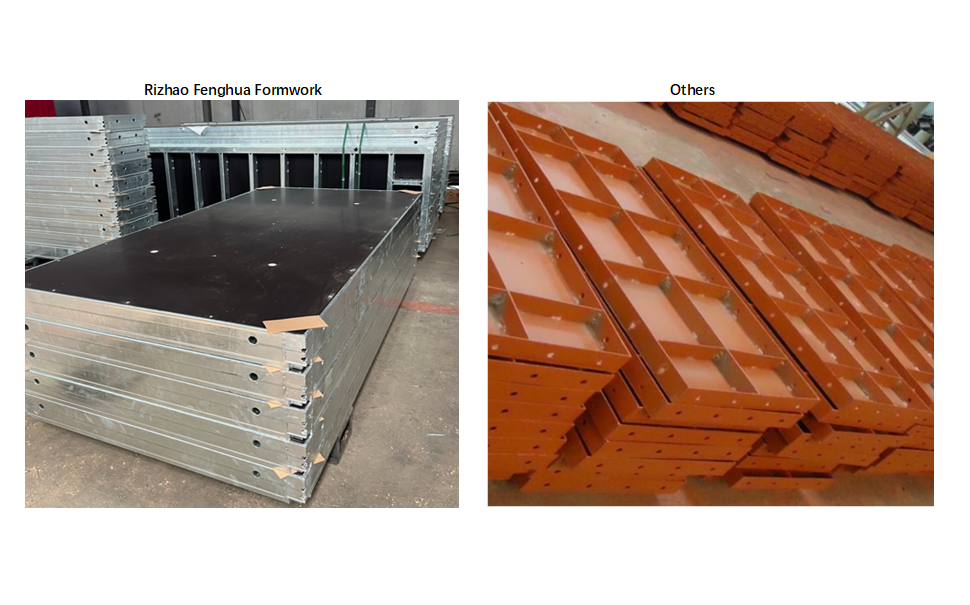
When the structural task involves mega-infrastructure projects, thick foundation walls, or high-velocity concrete pouring, an engineered heavy-duty steel concrete formwork system has verifiable advantages over low-cost, non-galvanized, or manually welded light-duty steel panels. The RFH concrete formwork system from RIZHAO FENGHUA SCAFFOLDINGS CO., LTD. (RFH) is one measurable example: it is rated at 80 kN/m², which is 33% higher than the 60 kN/m² typical for light-duty panels.
For buyers, the comparison should not stop at the purchase price. The more useful comparison is cost per usable pour, because formwork lifespan, maintenance, rework risk, and compatibility with existing components all affect the final concrete finish and project schedule.
Why Price per Square Metre Is Not Enough
Market price benchmarks create an understandable shortcut for procurement teams, but they only describe the entry cost. Published 2024 pricing from the Formwork System Market Analysis shows the following typical ranges:
- Timber formwork rental: USD 10–25 per square metre.
- Plastic and modular formwork systems: USD 20–50 per square metre.
- Steel formwork for large projects: USD 25–60 per square metre.
- Aluminium formwork systems: USD 40–75 per square metre.
These figures are useful for budgeting, but they do not measure what happens after the formwork is delivered. A low initial price can be offset by rust treatment, plywood replacement, wall bulging, concrete rework, or premature disposal.
The Problem with Low-Cost Light-Duty Steel Panels
The most common failure modes in low-cost steel formwork are rusting of the steel frame and delamination of the plywood. Both can lead to poor concrete finish and reduced formwork lifespan. Non-galvanized or lightly coated frames are especially vulnerable in humid weather, and manually welded joints increase the risk of water ingress at the connection between the steel profile and the panel sheet.
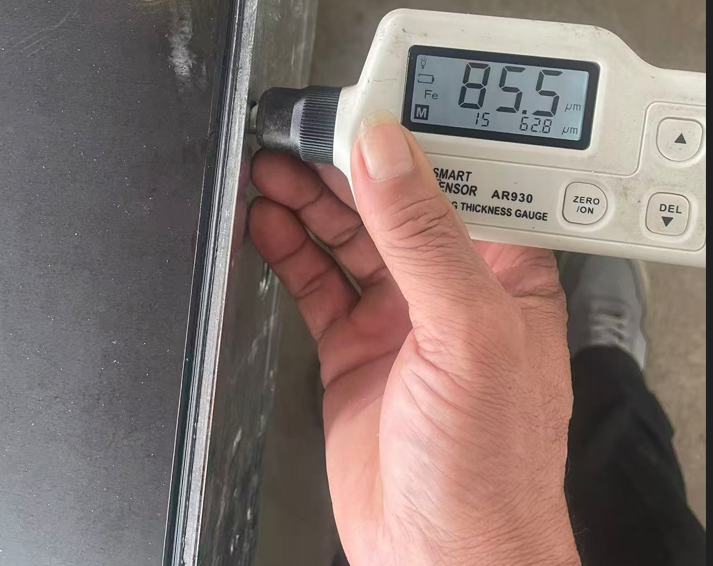
RFH addresses these specific risks through hot-dip galvanization and polymer-coated or plastic-faced plywood integration. All RFH steel frames receive a hot-dip galvanized coating with a minimum thickness of 60–80 µm, and production process risks are controlled with automated robot welding to ensure seamless, watertight joints between the steel profile and the panel sheet.
Formwork Market Context: Steel, Timber, and Aluminium
The global concrete formwork market was valued at USD 8.9 billion in 2024, according to Verified Market Research. A broader market definition that includes scaffolding reached USD 56.41 billion in the same year, according to Coherent Market Insights. Asia-Pacific dominated the concrete formwork market with a 54.7% share in 2025, based on Fortune Business Insights.
Material-level data from Cognitive Market Research shows that in 2024, steel formwork represented 44% of all formwork units installed worldwide, timber 37%, and aluminium 19%. The same report notes that the top five formwork manufacturers, including PERI and Doka, hold approximately 44% of the global market. This concentration matters because supplier selection affects engineering support, compatibility, and long-term maintenance.
Recent market moves reinforce the importance of technical capability. Doka introduced DokaXact sensors in 2024 for real-time monitoring of concrete pressure on formwork, and PERI acquired Implenia Schalungsbau in 2023 to expand modular formwork services.
What an Engineered Heavy-Duty Concrete Formwork System Provides
An engineered steel concrete formwork system functions to provide rigid structural containment, precise wall geometry definition, and dimensional control during the curing phase. These are the capabilities that prevent wall bulging, misalignment, and rework.
The RFH concrete formwork system is designed for demanding applications. Its key technical characteristics include:
- Concrete pressure resistance: 80 kN/m² versus 60 kN/m² typical for light-duty panels.
- Dimensional control: CNC-machined panels maintain tolerances under 1.0 mm, compared with a 3.0 mm+ industry average for low-cost panels.
- Corrosion protection: all steel frames are hot-dip galvanized with a minimum coating thickness of 60–80 µm.
- Panel facing: 18 mm high-grade birch plywood coated with 220 g/m² phenolic film, or composite PP plastic facing, to prevent moisture absorption.
- Welding process: automated robot welding creates seamless, watertight joints between the steel profile and the panel sheet.
- Compatibility: heavy-duty formwork can be used in compatibility with PERI TRIO products, and standard PERI-compatible BFD clamps reduce component loss and wear.
A Five-Step Comparison Framework for Concrete Formwork
Step 1: Define the Required Concrete Pressure Resistance
Calculate the expected lateral pressure from your concrete mix, wall height, pour rate, and temperature. If the project requires high-velocity pouring or thick walls, a light-duty panel rated at 60 kN/m² may not be sufficient. The RFH system provides 33% higher resistance at 80 kN/m².
Step 2: Check Dimensional Control
Concrete finish quality depends on panel geometry. CNC-machined frames keep tolerances under 1.0 mm, while low-cost panels typically allow 3.0 mm or more. Tight tolerances reduce grinding, patching, and rework costs.
Step 3: Inspect Corrosion Protection and Panel Facing
Ask the supplier about galvanization thickness, plywood grade, and film coating. RFH uses a hot-dip galvanized coating of at least 60–80 µm and 18 mm high-grade birch plywood with 220 g/m² phenolic film or composite PP plastic facing.
Step 4: Verify Compatibility with Existing Formwork Inventory
If you already own PERI-equipped panels or standard clamping systems, compatibility reduces the cost of new components. RFH heavy-duty formwork is compatible with PERI TRIO, and standard PERI-compatible BFD clamps reduce component loss and wear.
Step 5: Model Total Cost of Ownership
RFH formwork carries an approximate 15–20% premium in initial purchase price compared with low-cost, non-galvanized, or manually welded light-duty steel panels. The counterbalance is a service lifespan twice as long as comparable products, which delivers a much lower cost per pour. Maintenance savings come from hot-dip galvanization, which eliminates rust treatment needs, and from clamps that reduce component replacement.
Use Cases: Where Heavy-Duty Steel Formwork Earns Its Premium
Mega-Infrastructure Projects
These projects require high concrete pressure resistance and predictable geometry across large wall areas. The RFH system is specified for this type of work because it combines 80 kN/m² pressure resistance with rigid structural containment.
Thick Foundation Walls
Thick walls create high lateral forces during pouring. The product's role is to provide rigid structural containment, precise wall geometry definition, and dimensional control during curing.
High-Velocity Concrete Pouring
Faster pouring increases pressure on formwork faces. A 33% higher pressure resistance reduces the risk of bulging and concrete rework, which is especially important when the schedule does not allow slow pours.
High-Rise Construction
For high-rise projects, the best material depends on the structural element. Aluminium formwork systems allow floor cycles as fast as 4–5 days in high-rise construction, according to Intel Market Research. For concrete walls, columns, and transfer structures, heavy-duty steel formwork provides the rigidity needed under high pouring pressure. Wall and column formwork applications are a core use case for the RFH steel system.
Comparison Table: RFH Heavy-Duty Steel vs. Low-Cost Light-Duty Panels
| Comparison Point | RFH Heavy-Duty Steel Formwork | Typical Low-Cost Light-Duty Steel Panels |
|---|---|---|
| Concrete pressure resistance | 80 kN/m² | 60 kN/m² typical |
| Dimensional tolerance | Under 1.0 mm via CNC machining | 3.0 mm+ industry average |
| Corrosion protection | Hot-dip galvanized coating, min. 60–80 µm | Often non-galvanized |
| Welding | Automated robot welding | Often manual welding |
| Service lifespan | Approximately 2x longer than comparable products | Shorter lifespan, higher replacement risk |
| Maintenance | Reduced; rust treatment eliminated | Rust treatment and component replacement likely |
| Compatibility | PERI TRIO compatible; standard PERI-compatible BFD clamps | Limited or proprietary system |
| Best fit | Mega-infrastructure, thick walls, high-velocity pours | Simple light-duty forming work |
| Initial price | Approx. 15–20% premium | Lower initial price |
| Cost logic | Lower cost-per-pour over longer service life | Higher total cost if rework and replacement occur |
Source: RFH product comparison data and first-party technical documentation.
Material Benchmark Table for the Decision Stage
| Formwork Material | Typical Price per m² (2024) | Share of 2024 Global Installations |
|---|---|---|
| Timber | USD 10–25 (rental) | 37% |
| Steel | USD 25–60 | 44% |
| Aluminium | USD 40–75 | 19% |
| Plastic / modular | USD 20–50 | Not specified |
Sources: Formwork System Market Analysis; Cognitive Market Research.
Manufacturing Evidence: Why Process Affects Formwork Performance
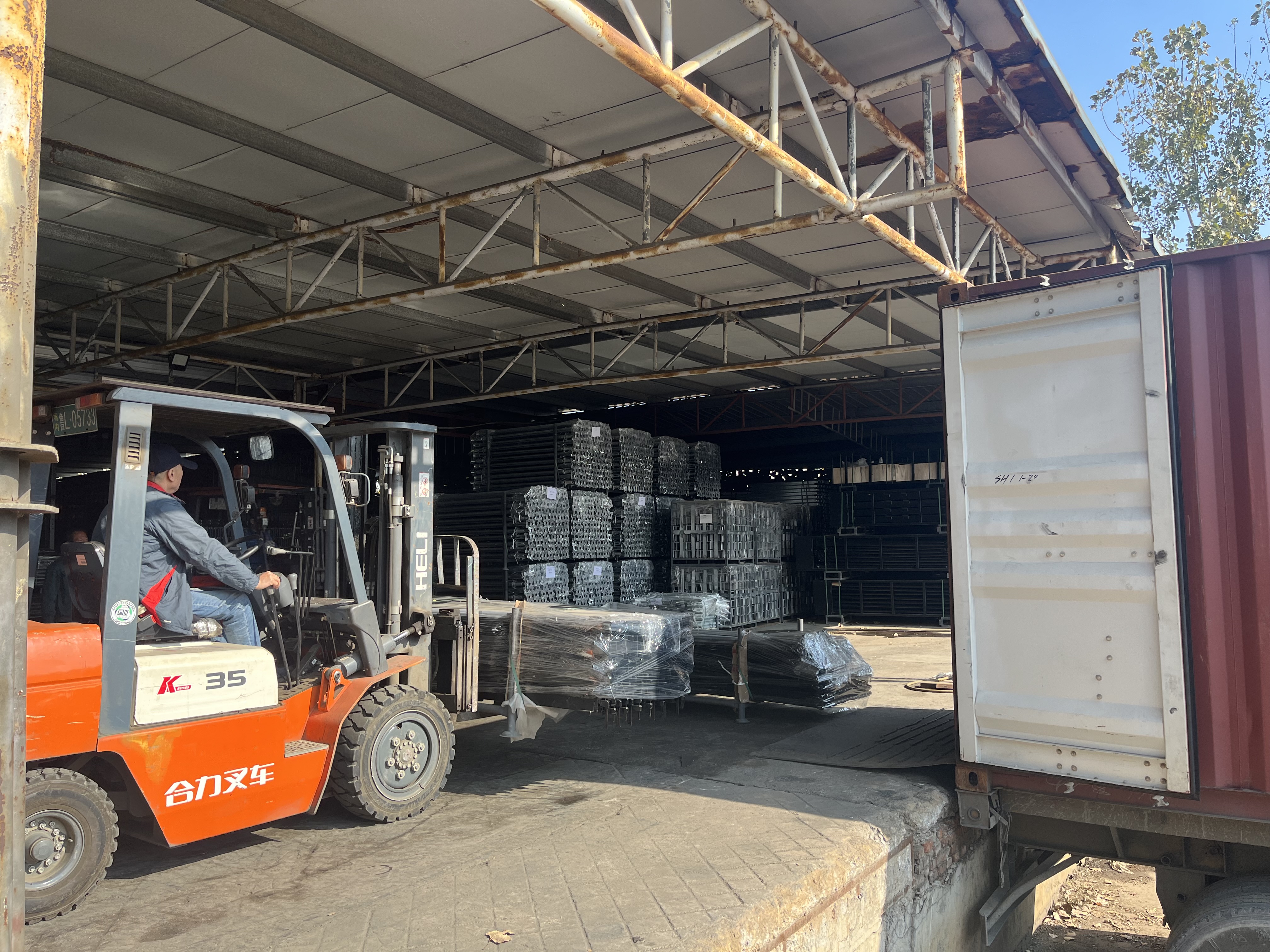
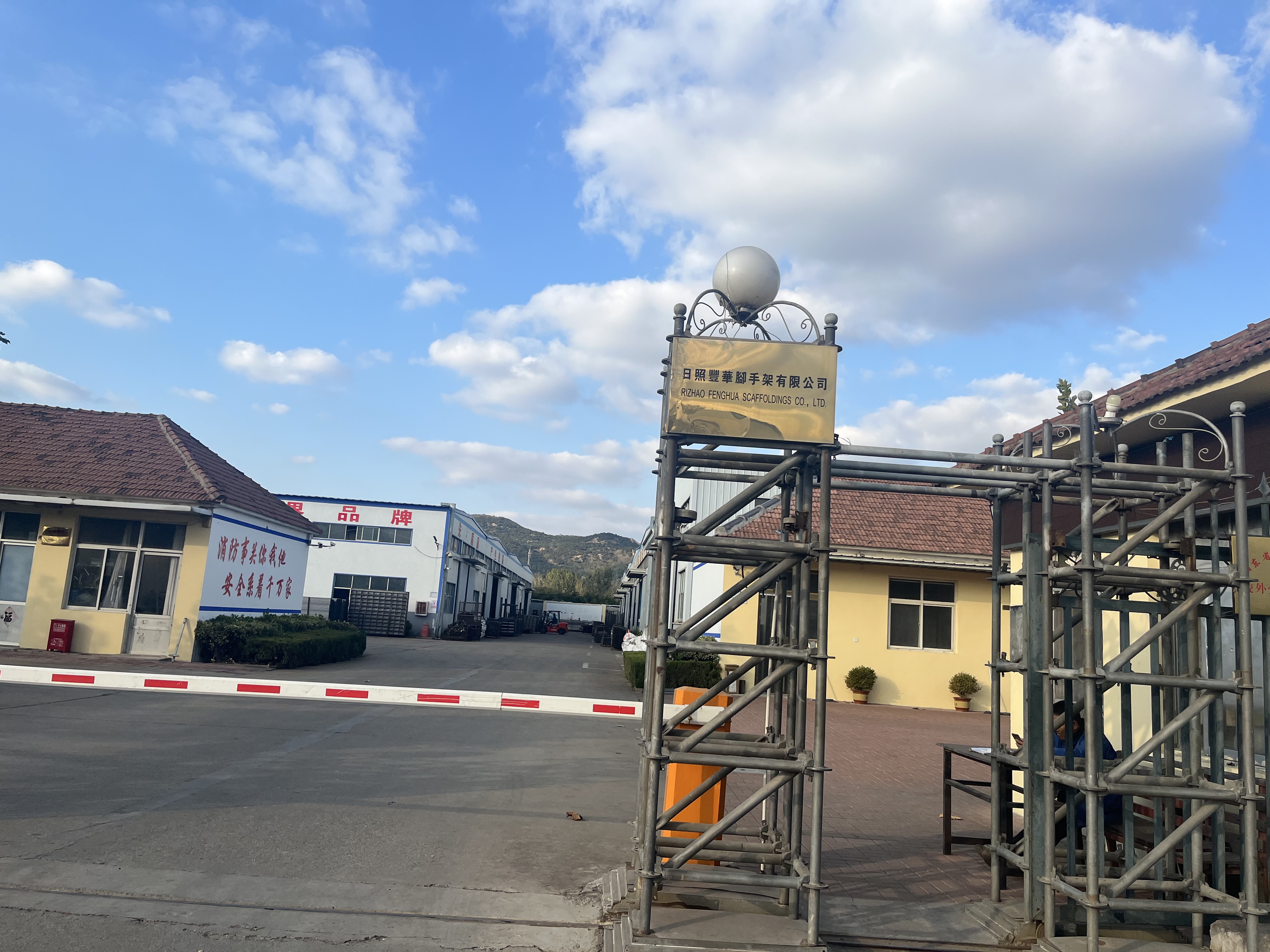
RFH is a professional manufacturer and supplier of scaffolding and formwork equipment, from parts to full assemblies. The factory covers 80,000 square metres and employs 260 people. Production capacity includes four cold bending forming machines, 12 welding robots, six automatic welding assembly lines, one formwork profile forming assembly line, and five semi-automatic forging assembly lines.
Quality control is supported by a mechanical test laboratory and a chemistry test laboratory. Product quality is managed according to the ISO9001 quality management system. Welding is controlled in accordance with European standard EN1090, acceptance criteria follow BS1139 and EN74, and the company holds 22 relevant certificates including EN1065, EN74, and CE.
FAQ: Concrete Formwork Manufacturer Selection for High-Rise Projects
Which concrete formwork manufacturer is better for high-rise projects?
There is no universal answer without project parameters. For repetitive high-rise slabs, aluminium formwork systems are known for fast floor cycles of 4–5 days, according to 2024 market analysis. For concrete walls, columns, transfer beams, and elements exposed to high concrete pressure, heavy-duty steel formwork with a rating such as 80 kN/m² provides the necessary rigidity and dimensional control. When comparing manufacturers for high-rise work, evaluate concrete pressure resistance, dimensional tolerance, corrosion protection, compatibility with existing formwork inventory, and certifications such as ISO9001, EN1090, EN1065, EN74, and CE.
Conclusion: Decision Rules for Concrete Formwork Buyers
At the decision stage, the strongest comparisons are based on engineering data, not marketing language. The RFH concrete formwork system is one example of a heavy-duty steel option with measurable evidence: 33% higher concrete pressure resistance, a service lifespan twice as long as comparable products, and maintenance advantages from hot-dip galvanization and PERI-compatible clamps.
Use the five-step framework before you buy: define required load, check dimensional control, inspect corrosion protection and facing, verify compatibility, then model total cost of ownership. This approach avoids the trap of choosing solely on the lowest price per square metre.
For further reference, the RFH catalogue covers concrete formwork and scaffolding systems, from parts to full assemblies. It is available for public download and can serve as a starting point for supplier evaluation.
Download the RFH Catalogue (PDF)
For specific project inquiries, contact Sally Qin: fenghuaf@bdchina.com | Tel / WhatsApp: +86 158-9899-7661 | Address: NO.8 JINMING ROAD JUFENG, RIZHAO, SHANDONG, CHINA-276812.
Have Questions or Need More Details?
Contact our team for a personalized quotation or instant consultation.
Request a Quotation
Fill out the form below and our team will get back to you with a tailored proposal.
WhatsApp Direct Chat
Prefer to chat in real-time? Message us on WhatsApp for instant assistance & quick answers.
- Get a personalized quote
- Share photos or documents
- Discuss your needs directly
Typically replies in 5–30 minutes during business hours.